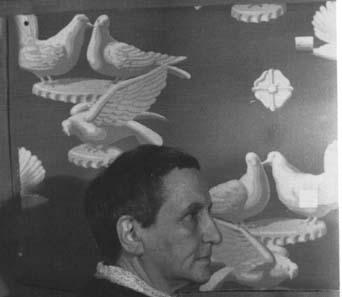
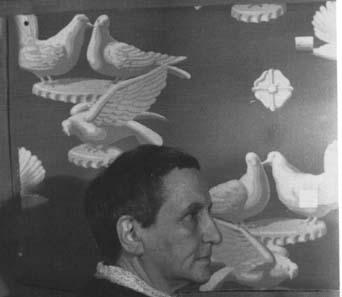
Gertrude Stein and a collection of Mandala patterns are just some of Janet Morton's influences
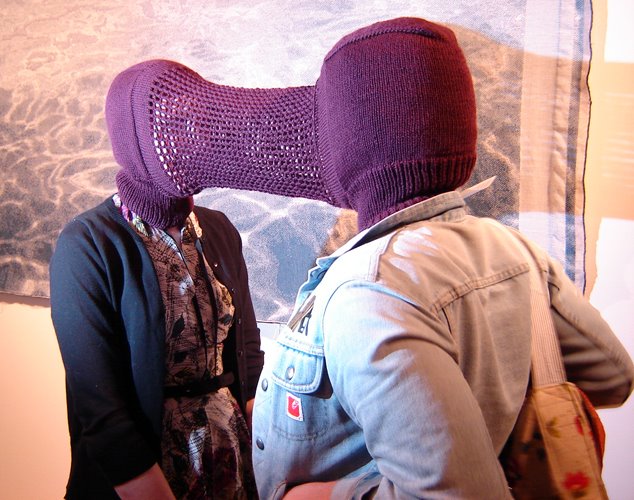
While wondering around looking at photos in the middle of May I was fortunate enough to drop in on the last day of the Janet Morton’s "Full Circle” show at the Paul Petro Gallery. Janet Morton should be known to Textile fans for her knitted house “Cosy “ which was show twice to bracket/ mark the millennium; on Wards island at 13 Third street in November 1999 and at Trinity Square in April 2000 if nothing else. It was constructed of recycled knit ware pieced together to cover an actual one story bungalow/ cottage and along with an exhibition called Wool Work at the Textile Museum in 2000 which featured knitted sculptures of everyday household objects in a series: Untitled (Domestic Interiors) and Untitled (Garden Box) along with Casting Off (a series of text based hand knitted “tapestry” which were left unfinished (Casting Off being use here with the double meaning of both finishing a knitted work as well as throwing away).
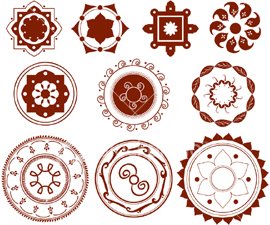
It is the three Untitled (Garden Boxes) pieces included in this recent exhibition which caught my attention. An exhibition consisting of a retrospective of “Mandalas” that Janet Morton has produce through out her career. A Mandala, in the Tibetan Mandala tradition is according to the Oxford dictionary, is “a circular figure of a religious symbol of the universe” and as Morton who has an appreciation for Gertrude Stein “rose is a rose is a rose” (an all encompassing circular statement of existence) says in her artist statement “In hindsight, I realize I had been creating work using the circle form as a sort of personal meditation all along.” She has worked the circle into her “Garden Boxes”.
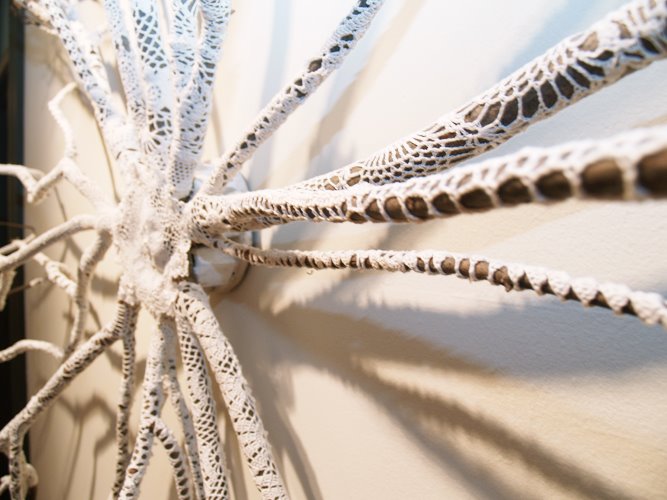
The “Garden Boxes” are in a long tradition of putting things in boxes to preserve protection or remember i.e. Reliquaries that housed bits of bone fragments or cloth or other objects supposedly belonging to Christ or some saint. It is a tradition that reached an apex in Victorian times when any thing and everything thing was put under glass. The Victorians like Morton created elaborate reefs made of dried flowers, hair( mourning reefs), seed and even insects ( as was seen in the small companion show to A Terrible Beauty at the TMC) These three boxes of recycled sweaters, wire, wood and glass were monochromatic in colour scheme, one red, one grey and one white. Each had a collection of fruits, flowers, branches and leaves each made of distinctly different hand or industrial knitted clothe using different size yarns giving a unique appearance to each element then placed in a knit lined deep shadow box frame complete with glass (coloured glass with the Red piece) They have a haunting beauty along with a sense of both whimsy and irony. Duality is consistent throughout most of Janet Morton’s work.
In many of the other Mandalas she combines “found” industrial made object then hand works them with traditional fine art (painting, drawing) or textile ( stitching, embroidery) construction or finishing practices. As Reef making was a repast of the supposedly idle Victorian Lady who had to fill in time each day between “good works” and the leaving of ones visiting cards, the skill, and the labour or time intensive work involved in creating these objects has only in the last thirty been placed into the art history discourse. In one piece she has sandwich the objects (cutlery, sugar packets among others) between sheets of clear mid weight plastic sewn them in then pieced them together using a gradation of size from large to small to create a pleasing balance of design that easily draws you in. These works are pleasing to look at but upon reflection they have a complication of meaning that isn’t ever simple. When you start to look at the individual objects and consider that perhaps they have been rescued from ending up in landfill as toxic waist the ecological politics then combines with the feminist and post feminist theory the spiritual meaning of universal wholeness they become an indictment against the current industrial-political combine’s stupidity.
Yet they remain pleasing to look at and there in lies yet another layer of contradiction. They could also just be an interesting interpretation of an ancient symbol as seen through contemporary eyes, either way it was a show worth seeing by an artist with who continues to intrigue
To find more information about Janet Morton
For her CV go to http://www.paulpetro.com/morton/index.shtml
Wool Work Catalogue is available from the Textile Museum Shop http://www.textilemuseum.ca/shop_books.html





 Posts
Posts


